Investor
One of California's most popular cabin markets was just ranked in the bottom 4 percent of the country for short-term rental yield. Here's the arithmetic behind that, and what it means for your down payment.
NITU Path, Chapter 7: Grow What You've Built.
In short: Buying a vacation home and buying an investment are two different goals that often get treated as one purchase. Run the actual numbers on a typical short-term rental cabin, and the cash yield usually loses to a plain index fund, sometimes badly. That doesn't mean a second home is a bad idea. It means the honest case for one usually rests on equity building, price appreciation, and how much you'll actually use it, not on the rental income covering the bills. Knowing which case you're actually making changes what property, market, and price point make sense.
Big Bear Lake was just rated a D-plus for short-term rental investability, placing it in the bottom 4 percent of markets nationwide for rental yield, according to data from Airbtics. It's also one of Southern California's most visited cabin destinations, with over 2,400 active listings already competing for guests. Those two facts sitting next to each other are the whole problem with buying a second home "as an investment" without doing the arithmetic first.
The Question Underneath the Question
"Should I buy a second home as an investment" is really two different questions wearing one sentence. One is: can I afford a place I'll enjoy, that also happens to generate some rental income while I'm not using it. The other is: if I put this money into real estate instead of anywhere else, will it actually perform like an investment is supposed to.
We've covered the financing and tax mechanics of buying a second home elsewhere, the bigger down payment, the rate premium, the property tax reset, the shared mortgage interest deduction cap, in buying a second home in California: what's different. This article picks up a level higher: once you can afford it, does it actually make financial sense as an investment, separate from whether you'd enjoy owning it.
Running the Actual Numbers on One Cabin
Take a fairly typical Big Bear Lake cabin at the current median sale price of $545,953. Financed as an investment property with 20 percent down and a 7.5 percent rate, roughly the current premium over a primary-residence loan, that's a $436,762 loan and a monthly principal-and-interest payment of $3,053.91.
Airbtics puts the median short-term rental in Big Bear Lake at about $46,000 in gross annual revenue, on 38 percent occupancy and a $319 average nightly rate. Against that revenue, the real operating costs stack up fast: property tax around $6,551 a year, a wildfire-loaded vacation-rental insurance policy around $4,800, property management at a typical short-term-rental rate of 25 percent of revenue ($11,500), a $425 annual permit renewal, utilities the owner covers instead of a tenant (roughly $4,200 a year), and a 10 percent maintenance reserve for turnover-heavy short-term use ($4,600).
That leaves a net operating income of about $13,924 before the mortgage is even paid, a 2.55 percent cap rate on the purchase price. Once the $36,647 in annual mortgage payments comes out, the cabin runs about $22,723 negative for the year, or roughly $1,894 a month, out of pocket.
What a Negative Cash-on-Cash Return Actually Means
Against the roughly $120,000 in cash it took to buy the cabin, down payment plus closing costs, that $22,723 annual shortfall works out to a cash-on-cash return of about negative 19 percent. Even crediting the loan paydown built into each mortgage payment, about $4,026 in the first year, the total return still comes out around negative 16 percent for the year, before counting a single dollar of appreciation.
That's not a Big Bear-specific problem. It's what happens almost anywhere a popular vacation-rental market has enough supply that nightly rates and occupancy can't outrun the cost of financing at today's rates, on top of the property tax, insurance, and management overhead that a primary residence never has to carry.
The Comparison Most Buyers Skip
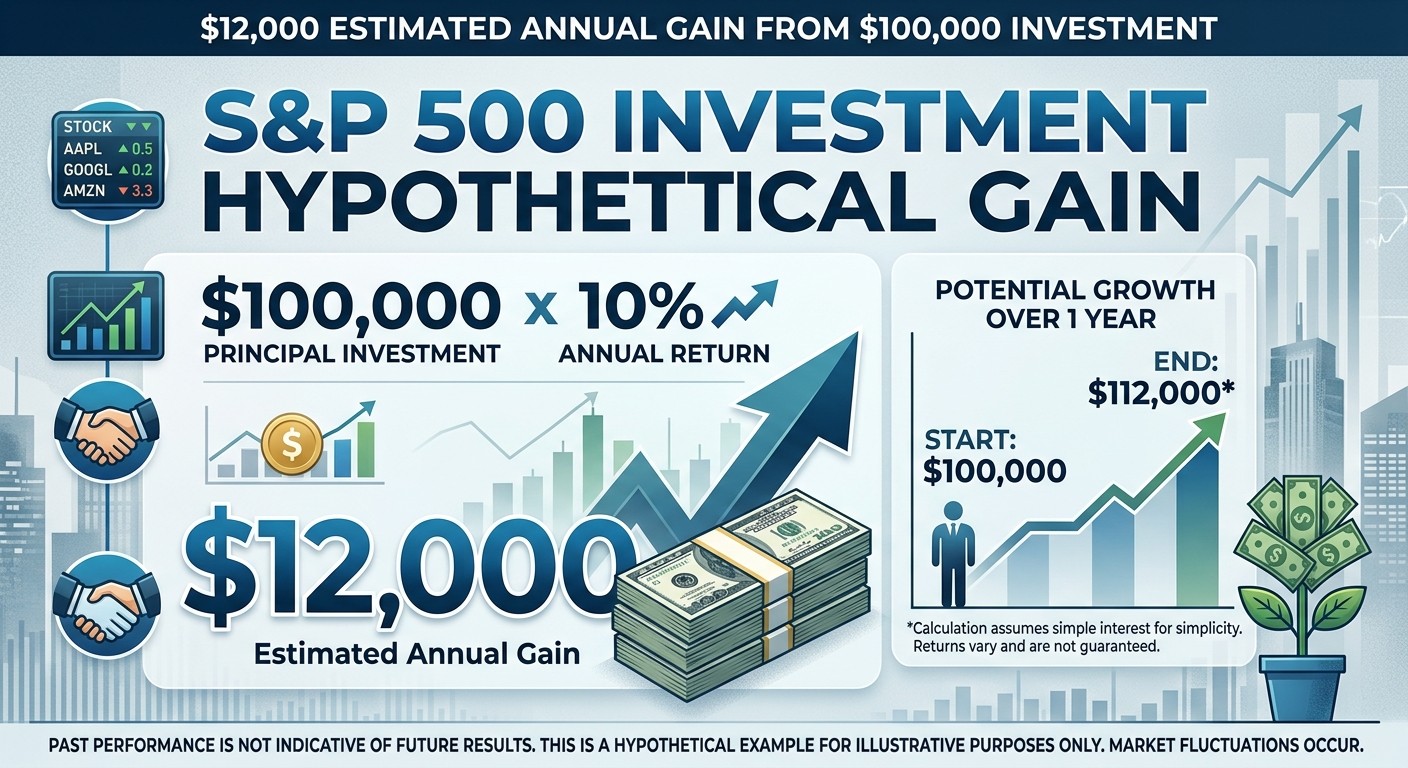
Here's the question that actually matters: what else could that $120,000 in cash have done. Put into an S&P 500 index fund, at its roughly 10 percent long-run historical average annual return, that same cash would have grown by about $12,000 in a single year, with no property tax, no insurance, no maintenance calls, and the ability to sell part of it in an afternoon if you needed the money. Even in a below-average year for the index, it's hard for a cash-on-cash return of negative 19 percent to come out ahead of a positive one.
This is the comparison a lot of second-home buyers never actually run. The mortgage payment gets compared to the rental income, and if the gap feels survivable, the deal feels justified. It rarely gets compared to what the same cash would have earned doing nothing at all.
The Case for Buying It Anyway
None of this means a second home is a bad purchase. It means the honest case for one rests on different math than the rental listing implies.
Every mortgage payment still builds equity, whether or not the cash flow is positive. If Big Bear home values rise even modestly over the years you own the cabin, that appreciation can outweigh the annual cash shortfall entirely, the same way it does for a primary residence. The difference is that appreciation is a real possibility, not a documented, decades-long average the way the stock market's return is. Betting on it is a genuinely different kind of bet than earning a known historical yield.
And a second home comes with something an index fund doesn't: you actually get to use it. If the honest plan is a few weeks of use a year plus enough rental income to offset part of the carrying cost, that negative $1,894 a month is closer to a membership fee for a place your family enjoys than a failed investment. The math only turns dishonest when a buyer tells themselves the rental income will functionally pay for itself, without ever running the actual cap rate first.
Where the Math Can Actually Work Better
Not every second home lands where this one does. A long-term rental in a lower-priced, landlord-friendly market typically clears a meaningfully higher cap rate than a short-term rental in an oversaturated resort town, without the management overhead or occupancy swings. A cabin bought below market, in a needs-work condition that keeps the purchase price down, changes the same math considerably. And a market with less existing short-term rental supply than Big Bear's 2,400-plus listings has more room for occupancy and rates to actually support a mortgage. The specific numbers, not the category of "second home," are what decide whether a given property is a real investment or a lifestyle purchase with a rental income subsidy attached.
If the plan involves converting an existing home you already own into a rental instead of buying a new one, the math runs differently again, largely because you're not taking on a new loan at today's rates. We've walked through that version in turning your first home into your first rental property.
It's also worth knowing that the mortgage interest deduction on a second home isn't guaranteed to stay exactly as it is. California came close to changing it once already, and we've covered what that would and wouldn't have affected in will California eliminate the mortgage interest deduction on second homes.
Weighing It Honestly
A second home can be a genuinely good decision. It's rarely a good decision for the reason most buyers first tell themselves, that the rental income will basically cover it. Run the actual cap rate before assuming that. If the numbers land the way Big Bear's do, negative cash flow, a cap rate under 3 percent, a return that trails a plain index fund, that's not necessarily a reason to walk away. It's a reason to be honest about what you're actually buying: a place you'll use, that happens to generate some income, rather than an investment that happens to be a house.
Quick Check: Buying a Second Home as an Investment
Q1. According to Airbtics, how did Big Bear Lake rank nationally for short-term rental investability?
(a) Top 4 percent
(b) Bottom 4 percent
(c) Roughly average
B
Airbtics rated Big Bear Lake in the bottom 4 percent of markets nationwide for short-term rental yield, a D-plus investability grade.
Q2. In the worked example, what was the cap rate on the Big Bear Lake cabin before the mortgage payment?
(a) About 2.55 percent
(b) About 12 percent
(c) About 25 percent
A
The cabin's net operating income worked out to about a 2.55 percent cap rate on the purchase price, before the mortgage payment.
Q3. (T/F) Once loan paydown is included, the cabin's total first-year return, excluding appreciation, turns positive.
F — Even after crediting the first year's loan paydown, the total return still came out around negative 16 percent, before any appreciation.
Q4. What is the main comparison the article says most second-home buyers skip?
(a) Comparing two different mortgage lenders
(b) Comparing the property's return to what the same cash could have earned invested elsewhere, such as in an index fund
(c) Comparing the cabin to a hotel room rate
B
The article points out that the mortgage payment usually gets compared only to the rental income, rarely to what the same cash would have earned invested elsewhere.
Q5. What does the article say could make the total return on a second home positive despite negative cash flow?
(a) A lower short-term rental management fee alone
(b) Meaningful home price appreciation over the ownership period
(c) Switching to a 15-year mortgage
B
Meaningful appreciation in the property's value can outweigh a negative annual cash flow over time, though unlike a stock market average, it isn't a documented, reliable historical rate.
Q6. According to the article, which type of second-home purchase tends to clear a meaningfully higher cap rate than a short-term rental in an oversaturated resort market?
(a) A long-term rental in a lower-priced, landlord-friendly marke
(b) Any home purchased at the countywide median price
(c) A home with a swimming pool
A
A long-term rental in a lower-priced, landlord-friendly market typically clears a higher cap rate than a short-term rental competing in an oversaturated resort market.
About the author: I'm a licensed real estate agent practicing in California. This article is part of NITU Path, Chapter 7, a series written to walk buyers through their entire homeownership journey.
This article is for general informational and educational purposes only and is not financial, tax, or investment advice. Rental income, mortgage rates, operating costs, and market conditions vary by property and change over time. Run current numbers with your agent, lender, and property manager before treating any property as an investment.
Sources:
Back to Magazine