Home Owner
An inspection tells you what's wrong with a house right now. It doesn't tell you what that same house will quietly need every single year after you move in.
In short: A clean inspection tells you a house has no major defects on the day you buy it. It doesn't tell you what that house will predictably need every year afterward, based on its age, its landscaping, and its location. Knowing that in advance, and building a maintenance calendar and a reserve fund around it, turns what feels like a string of unlucky surprises into a set of costs you actually saw coming.
I bought my own house in 2020. It was about 20 years old, the inspection came back clean, and the only real flag was an exterior light that didn't turn on, which felt almost too minor to mention. I moved in feeling genuinely prepared.
Within the first year, ants started coming in steadily enough that I ended up hiring a professional pest control company every single year since, which I hadn't budgeted for at all. The mature trees on every side of the property, the exact thing that made the yard feel lush and private when I first saw it, turned out to cost several hundred dollars a year in trimming and upkeep. More recently, I dealt with an actual termite problem, the kind of issue that a lot of older homes in tree-heavy areas eventually run into.
Looking back, none of this was really bad luck. My home's age and the amount of mature landscaping around it were both known, predictable factors the day I bought it. If I'd understood back then how much those two things alone would shape my yearly costs, I could have planned for the pest and tree expenses as an expected part of ownership instead of relearning it one surprise bill at a time. That's the gap this article is meant to close: a practical calendar for how to maintain a home on a regular schedule, built around what your specific house is actually likely to need.
Why the Inspection Isn't the Same as a Maintenance Forecast
A home inspection is a snapshot. It tells you whether the roof, foundation, electrical, and plumbing have visible problems on that particular day, and that's genuinely valuable information. What it generally can't tell you is what's coming next year, or the year after that, because a lot of ongoing maintenance isn't about a defect at all. It's about age, landscaping, and location quietly generating the same predictable costs year after year, the way my own trees and the age of my house did.
What Your Home's Age and Surroundings Actually Predict
Home age. Newer homes generally need routine upkeep. Homes in the 15 to 30 year range, like mine was, tend to start needing bigger-ticket attention: roofing, water heaters, and HVAC systems all have realistic lifespans, and a home in that age range is often approaching one of those milestones even if nothing looks obviously wrong yet.
Landscaping and lot layout. Mature trees close to a house are genuinely beautiful, and they also come with a real, recurring cost, typically $400 to $900 per tree for professional trimming every three to five years. A property with several mature trees on it, front and back, is signing up for that as an ongoing line item, not a one-time expense.
Location and climate. Termite risk, general pest pressure, and moisture-related issues all vary meaningfully by region and by how much vegetation surrounds a property. A house in a termite-prone area with a lot of surrounding greenery is simply more likely to need pest management as a routine expense than a home in a drier climate with minimal landscaping.
None of these factors show up as a defect on an inspection report. All of them are knowable before you buy, if you ask the right questions and think about your specific property instead of a generic maintenance checklist.
The Maintenance Calendar
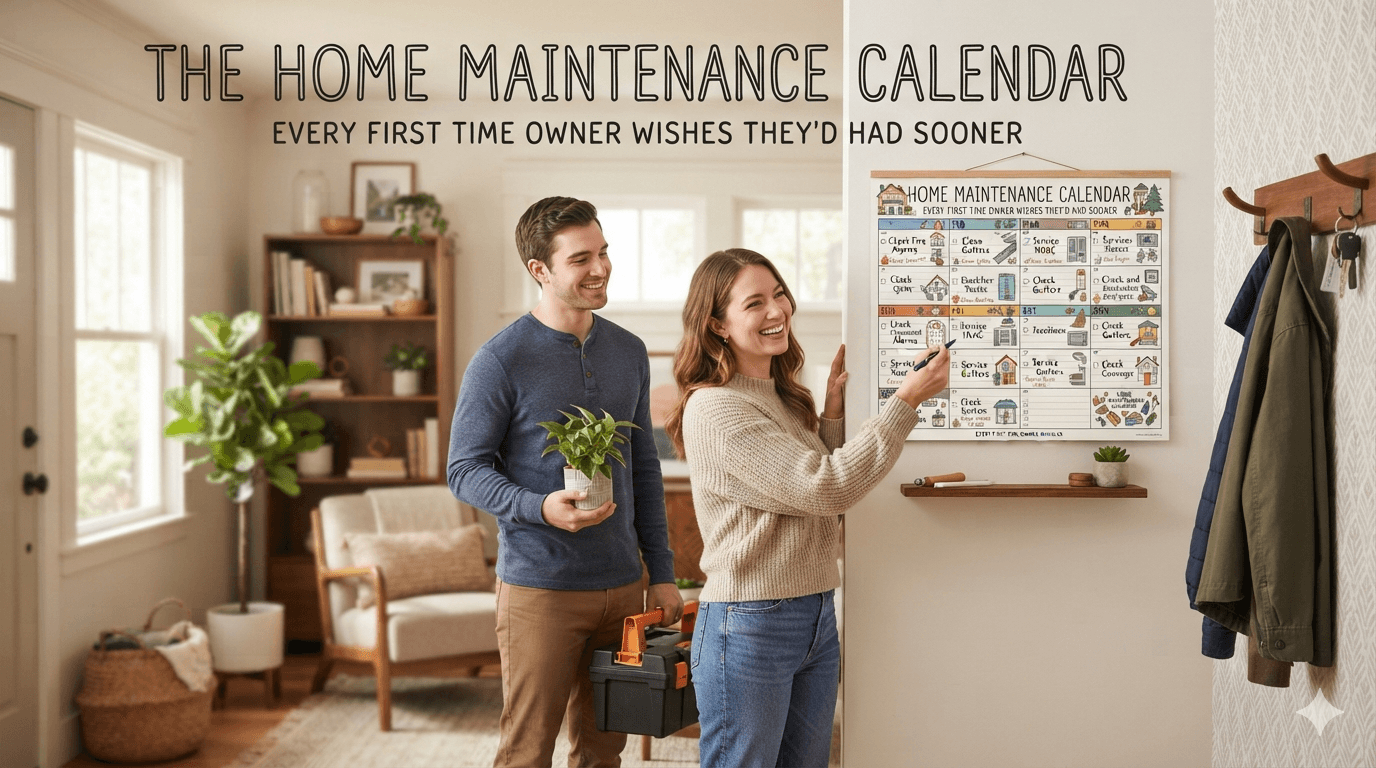
A useful way to think about home maintenance is less like a single annual to-do list and more like a recurring calendar, organized by season.
Spring: Inspect and service HVAC systems before cooling season, check exterior caulking and weatherstripping, clean gutters after winter debris, and schedule an annual pest inspection if you live somewhere with seasonal pest activity.
Summer: Trim trees and shrubs away from the roofline and foundation, inspect irrigation systems, and check for any signs of pest entry points around the exterior while everything is easy to see.
Fall: Service the heating system before it's needed, clean gutters again before leaves and rain arrive together, and inspect the roof for any damage before winter weather makes repairs more difficult.
Winter: Check for drafts and insulation gaps, test smoke and carbon monoxide detectors, and flush the water heater to clear sediment buildup.
Every one to three years, regardless of season: A termite or pest inspection, especially for an older home or one with significant landscaping, and a broader check of your roof, foundation, and major systems for anything trending toward the end of its expected lifespan.
Building the Reserve That Makes This Manageable
The standard guidance is to set aside roughly 1 to 3 percent of your home's value each year for maintenance and repairs, leaning toward the higher end for an older home. On a $700,000 home around 20 years old, a 2 percent reserve works out to about $14,000 a year.
Here's what that actually covers, using rough figures for illustration: an annual pest control contract runs somewhere around $600 a year, and trimming a handful of mature trees on a multi-year cycle averages out to roughly $500 a year. Even in a year where an unexpected termite treatment comes up, averaging around $650 in California, those three costs together add up to about $1,750, only around 12 percent of that $14,000 reserve. The rest stays available for bigger, less frequent items like roofing or HVAC replacement.
The point isn't that the exact percentages matter down to the decimal. It's that a reserve sized to your home's age and landscaping turns something like my own termite bill from a stressful surprise into a cost the budget had already made room for.
What I'd Do Differently, Knowing What I Know Now
If I were buying again, I'd ask directly about the home's age relative to its major systems, and I'd walk the property specifically thinking about what the landscaping implies for ongoing cost, not just how nice it looks. We covered the broader idea of keeping a real financial cushion after closing in how much cash you actually need saved, and a maintenance reserve is really the same principle applied every year afterward, not just in the first few months.
I'd also ask a seller or their agent directly whether the home has had any pest or termite history, since that single question would have told me almost everything I eventually learned the hard way.
FAQ
Q1. How do I know if my home's maintenance needs are above or below average? Start with its age and its landscaping. An older home, or one with substantial mature trees and vegetation close to the structure, generally runs above the low end of the typical maintenance range, while a newer home with minimal landscaping tends to run lower.
Q2. Is it worth paying for a pest inspection even if I haven't seen any pests? Generally yes, particularly for an older home or one in a termite-prone area, since termite damage in particular can progress for a while before it's visibly obvious.
Q3. Should I trim my own trees to save money? For small branches and basic upkeep, it can be reasonable. For anything near power lines, close to the roofline, or requiring real height, a professional is generally worth it both for safety and for the tree's long-term health.
Q4. What if my maintenance reserve goes unused in a given year? That's a genuinely good outcome, not wasted money. Let it carry forward, since an unusually calm year is often followed by a year with a bigger, less predictable expense like a roof or system replacement.
Quick Check: Home Maintenance Planning
Q1. What does a home inspection primarily tell a buyer?
(a) Whether there are visible defects on that specific day (b) What the home will need to have every single year going forward
(b) What the home will need to have every single year going forward
(c) The exact resale value of the home
A
inspection reflects visible conditions on a single day; it doesn't predict what a home will need in future years based on age or landscaping.
Q2. (T/F) A home's age and surrounding landscaping have no meaningful effect on its typical annual maintenance costs.
F — A home's age and its surrounding landscaping are both meaningful, predictable factors in how much ongoing maintenance it's likely to require.
Q3. What is the general rule of thumb for an annual home maintenance reserve?
(a) A fixed $500 regardless of home value
(b) Roughly 1 to 3 percent of the home's value each year
(c) Whatever is left over at the end of the year
B
Setting aside roughly 1 to 3 percent of a home's value each year, leaning higher for older homes, is the standard guidance for a maintenance reserve.
Q4. According to the article, what tends to increase a property's exposure to pest and termite issues?
(a) A newer home with minimal landscaping
(b) A smaller lot size
(c) Mature trees and vegetation close to the structure, especially in a termite-prone climate
C
Mature trees and vegetation close to a house, particularly in a termite-prone climate, meaningfully increase the likelihood of ongoing pest and termite issues.
Q5. What question does the author recommend asking a seller before buying?
(a) Whether the home has had any pest or termite history
(b) What color the previous owners painted the walls
(c) How many owners the home has had
A
Directly asking about a home's pest or termite history before buying can reveal recurring issues that an inspection alone might not surface.
About the author: I'm a licensed real estate agent practicing in California. I bought my own home in 2020 and learned several of these lessons firsthand. This article is part of NITU Path, Chapter 5, a series written to walk first-time buyers through their entire homeownership journey.
This article is for general informational and educational purposes only and is not financial, legal, or pest management advice. Maintenance needs and costs vary significantly by home, region, and climate; the figures here are general, illustrative ranges as of 2026. Consult licensed professionals, including a pest control specialist or contractor, about your specific property.
Sources:
Back to Magazine