Home Owner
Not every issue in a new home is an emergency, and not every emergency looks like one. Here's a simple way to tell which repairs actually need you this week.
In short: Most of what breaks in a first year of homeownership isn't actually an emergency, but a few things are, and mixing up which is which gets expensive fast. The real test isn't how alarming something looks. It's whether it's actively getting worse right now, whether it could hurt someone, and whether waiting makes it cost more later. A small water leak ignored for a few months can easily cost three times what fixing it right away would have, partly because home insurance usually won't pay for damage caused by a problem you already knew about and didn't fix.
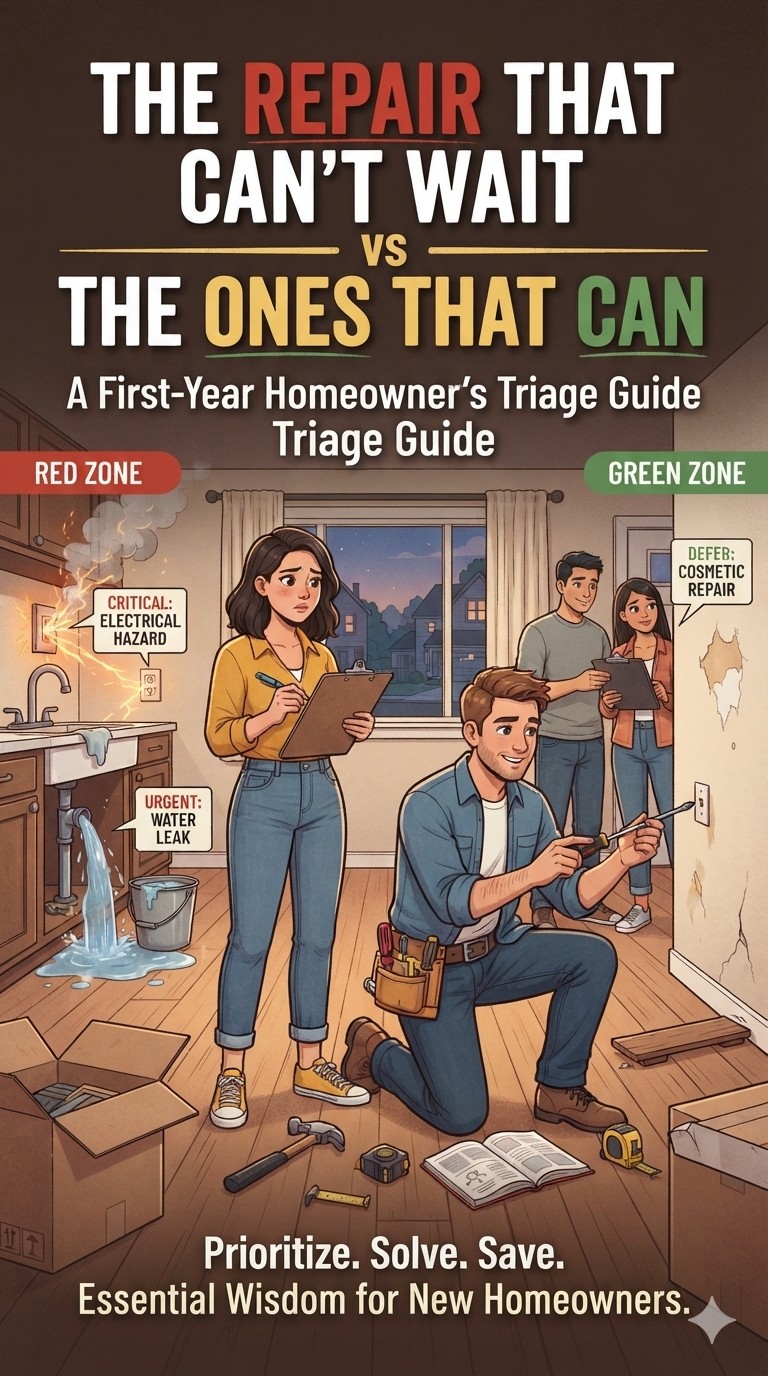
Mia and Derek closed on their house in Rancho Cucamonga almost exactly a year ago. In that year, a small list has built up: a slow drip under the kitchen sink, a hairline crack in the drywall near a window, the water heater making a new clunking sound, a loose stair railing, one curled-up shingle after a windstorm, and an outlet that sparked once when Derek plugged in a space heater. None of it felt urgent enough to deal with in the moment. Now their one-year home warranty is about to expire, and they're finally asking the question they should have asked back in month one: which of these actually needs attention now, and which can wait for the spring budget?
The One Question That Actually Sorts the List
Forget how alarming something looks or sounds. The question that actually matters is simpler: is it getting worse right now, could it hurt someone, and does waiting make it more expensive?
A crack in a wall that's been the same size for a year fails all three tests. It's not moving, it's not dangerous, and painting over it next month costs the same as painting over it today. A slow drip under a sink fails the first and third test even if it looks harmless: it's actively getting worse every day it runs, and the cost of the water damage it eventually causes will almost always be bigger than the cost of the fix itself. That's the actual dividing line, not how big or scary something feels in the moment.
The Ones That Can't Wait
Some things belong at the top of the list no matter how small they seem right now. Any active water leak counts, whether it's a slow drip or a steady stream, because water damage compounds by the day and often stays hidden inside walls and under floors until it's expensive. A gas smell counts too, always, and it means calling the gas company or 911 immediately, not scheduling a technician for next week. So does a lack of heat during a hard freeze or a lack of cooling during extreme heat, especially for young children, older adults, or anyone with a health condition that makes temperature swings dangerous. An outlet that sparks, a breaker that trips repeatedly, or a burning smell from anything electrical belongs in this category too, since electrical issues are one of the more common causes of house fires. A sewage backup, a roof that's actively leaking during rain rather than just showing wear, and any crack in a foundation or wall that's visibly growing all belong here as well. None of these get cheaper by waiting, and several of them can genuinely hurt someone.
Q1. What's the clearest sign that a repair genuinely can't wait?
(a) It looks unattractive or embarrassing to guests
(b) It's actively getting worse right now, and it could hurt someone or raise the cost the longer it sits
(c) It was mentioned in the home inspection report
B
The clearest sign a repair can't wait is that it's actively worsening, could hurt someone, or gets more expensive the longer it's ignored, not how alarming it looks.
The Ones That Usually Can
Plenty of things look worse than they are. A hairline crack in drywall from a house settling normally, the kind that isn't growing and doesn't run diagonally across a doorway, is almost always cosmetic. A single curled or missing shingle, with no active leak showing up inside, can usually wait for a scheduled roof inspection rather than an emergency call. A drain that's running slow but still draining, a water heater or HVAC system that's aging but still working, a fence that needs paint, and a garage door that's a little noisy all fall into this bucket too. The test still applies: none of these are actively getting worse by the hour, none of them are dangerous today, and waiting a few weeks or months to budget for them properly doesn't meaningfully raise the cost.
What Waiting Actually Costs
The water heater is the clearest example on Mia and Derek's list, because it sits right on the line between the two buckets. At 11 years old, it's within the 6-to-12-year range most plumbers expect from a standard tank water heater, and the new clunking sound usually means sediment buildup or a heating element wearing out, not an emergency by itself. But if it's also showing rust or a small amount of moisture at the base, that's a different story: a tank water heater that's starting to leak is one repair away from becoming a flood.
Replacing it proactively, before anything fails, runs somewhere around $1,900 for a standard gas unit with installation. Waiting until it actually fails and floods the surrounding area changes the math completely. An emergency same-day replacement typically costs a bit more, closer to $2,200, and the water damage left behind, drywall, flooring, and the mold remediation that often follows a leak nobody caught right away, adds roughly $3,700 more on top of that. All in, waiting comes out to about $5,900, roughly three times what handling it now would have cost, and that's before factoring in that home insurance frequently won't cover any of it.
Q2. (T/F) A slow water heater leak that's been dripping for weeks is generally treated the same as a sudden burst pipe when it comes to a homeowners insurance claim.
F — A slow, known leak is usually treated very differently from a sudden burst pipe; insurers generally cover sudden, unexpected damage but exclude damage from a known problem left unaddressed.
Why Insurance Won't Always Bail You Out
This is the part that catches a lot of first-year homeowners off guard. Most homeowners insurance policies exclude water damage caused by a slow leak, poor maintenance, or a problem the homeowner already knew about and didn't fix. Insurers generally expect homeowners to take reasonable steps to prevent damage once they're aware of an issue, sometimes called a duty to mitigate. A sudden, unexpected event, like a pipe bursting out of nowhere, is usually covered. A leak that's been dripping for weeks before it finally causes real damage often isn't, precisely because it wasn't sudden or unexpected anymore. If Mia and Derek already know about that water heater, waiting doesn't just risk a bigger repair bill. It risks paying for the whole thing themselves. We've looked at how insurance changes shape once a home becomes a rental in turning your first home into your first rental property, and the same core idea holds here too: insurers price and pay claims based on how a home is actually cared for, not just what happened to it.
The Law Most New Homeowners Have Never Heard Of
While Mia and Derek are already looking at that water heater, there's a California-specific detail worth checking at the same time. State law requires residential water heaters to be strapped, braced, or anchored to resist toppling over or shifting during an earthquake. It's a simple, inexpensive fix, usually just a metal strap kit, and sellers are required to certify in writing that it's been done before closing. It's easy to assume it was handled during the purchase and never actually check. Since a technician is already going to be at the water heater either way, it costs nothing extra to confirm the strapping is there and properly installed.
The Warranty That's About to Disappear
There's a deadline hiding in Mia and Derek's situation that has nothing to do with how urgent any single repair is: their home warranty. Most home warranties, including the kind a seller often provides at closing, run on a standard one-year term and don't renew automatically. Once it expires, anything it would have covered, often including major systems like the water heater and HVAC, gets paid for entirely out of pocket instead. That makes the week before a warranty expires a genuinely good time to get anything borderline looked at, not because the repair itself got more urgent, but because the cost of it is about to change.
Weighing It Honestly
None of this requires Mia and Derek to fix everything on their list at once, and it shouldn't. It requires sorting the list correctly, once, using the same three questions every time: is it getting worse right now, could it hurt someone, and does waiting raise the cost. The water leak and the sparking outlet go first, this week, warranty or not. The hairline crack and the noisy garage door can genuinely wait for the spring budget without costing them anything extra. The habit worth building isn't reacting to whatever feels most alarming. It's asking the same three questions every time something new turns up, for as long as they own the house.
Quick Check: Repair Triage for First-Year Homeowners
Q3. Why might a homeowners insurance claim get denied for water damage from a leak the homeowner already knew about?
(a) Most policies exclude damage from a known issue that wasn't promptly fixed
(b) Insurance never covers any water damage under any circumstances
(c) Only leaks under $500 are covered
A
Most homeowners policies exclude water damage tied to a known issue the homeowner didn't promptly fix, often described as a failure to mitigate.
Q4. What does California law require for residential water heaters?
(a) They must be braced, strapped, or anchored to resist earthquake movement
(b) They must be replaced every 10 years regardless of condition
(c) They must be installed outdoors only
A
California law requires residential water heaters to be braced, strapped, or anchored to resist falling or shifting during an earthquake.
Q5. How long does a standard home warranty, including one a seller provides at closing, typically last?
(a) Five years
(b) One year, and it usually doesn't renew automatically
(c) For as long as the original buyer owns the home
B
Standard home warranties, including seller-provided ones, typically run for one year and don't renew automatically once that term ends.
About the author: I'm a licensed real estate agent practicing in California. This article is part of NITU Path, Chapter 5, a series written to walk buyers through their entire homeownership journey.
This article is for general informational and educational purposes only and is not legal, insurance, or professional repair advice. Always call emergency services for a gas leak, and consult a licensed contractor, plumber, or electrician for anything involving safety. Insurance policy terms vary by carrier and by state; review your own policy for its specific exclusions.
Sources:
Back to Magazine