First Home Buyer
Pasadena and Altadena get mentioned in the same breath so often that many buyers assume the January 2025 Eaton Fire touched both equally. It didn't — and understanding the actual difference matters for anyone house-hunting in the San Gabriel Valley.
A companion piece to our How to Buy a House in the US series and our earlier region guide to California's Inland Empire — this one covers a city that first-time buyers often shortlist for its schools, its architecture, and its walkability, and then have questions about after the news of the past two years.
Jenny had been circling a listing in northwest Pasadena for weeks in late 2024 — a 1930s Craftsman bungalow, walking distance to a park, priced right at the edge of what she and her husband could afford. Then, in January 2025, the Eaton Fire tore through the hillsides above the city. National coverage kept saying "Pasadena area," and Jenny, watching the news from her apartment in LA, assumed the worst and quietly stopped checking listings altogether. She figured the whole city was either gone or about to become uninsurable.
She picked her search back up nine months later, mostly out of curiosity, and learned two things that surprised her. First, the fire had devastated Altadena, the unincorporated community directly north of Pasadena, and while parts of northwest Pasadena had been evacuated and threatened, the city itself lost very few structures — her old listing's neighborhood was untouched. Second, even though her target house had never been at risk, her insurance quote had gone up anyway, because insurers had reclassified wildfire risk across a much wider swath of the San Gabriel foothills, Pasadena included, regardless of what had actually burned.
Jenny bought a house in Pasadena eight months ago. Getting there required sorting out exactly what had happened, where, and what it actually meant for her — which is the same untangling this article is meant to help with.
Before we begin: every price and market statistic in this article reflects Pasadena conditions as of 2026, sourced and cited at the end of this piece. Insurance conditions in particular are changing rapidly in this region — get an actual quote for any specific address before writing an offer, not an estimate based on the neighborhood's general reputation.
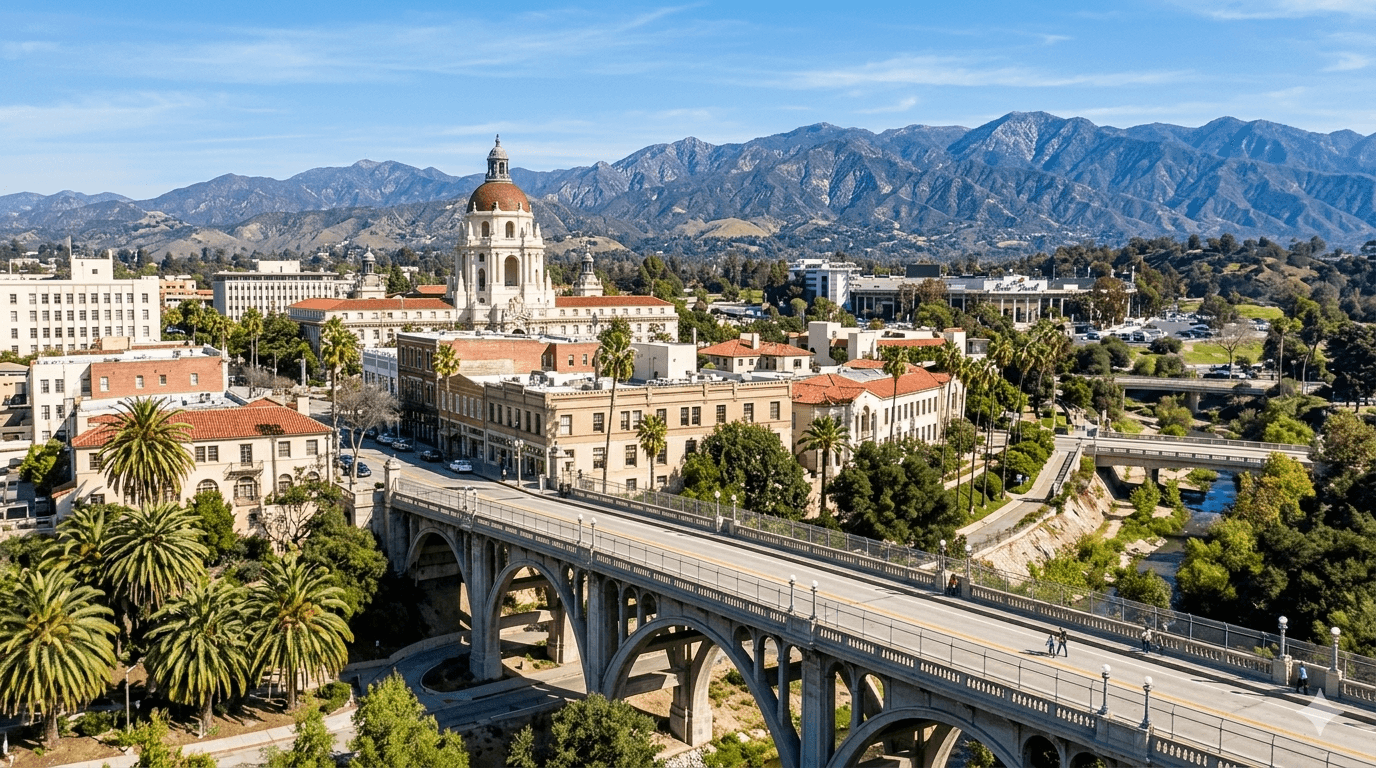
First, an Important Clarification: Pasadena Is Not Altadena
This matters enough to address directly, before anything else. Altadena is an unincorporated community in Los Angeles County, immediately north of Pasadena, with its own distinct identity, history, and — as of January 2025 — its own catastrophic loss. The Eaton Fire destroyed a huge share of Altadena's housing stock, and the community is still in the middle of a long, difficult rebuilding process as of 2026.
Pasadena, the incorporated city just to Altadena's south, is a separate place with its own city government, school district, and identity — and while the fire threatened and forced evacuations in parts of northwest Pasadena near the foothills, the overwhelming majority of the city's housing stock was never touched by flames. If you're house-hunting in Pasadena today, you are very likely not looking at fire-rebuild properties, and the city's core neighborhoods — Old Town, South Lake, Linda Vista, Bungalow Heaven — are functioning real estate markets, not recovery zones.
That said, the fire's effects don't stop cleanly at the city line, which is the second half of Jenny's story and worth its own section below.
Which community, not Pasadena itself, was most heavily destroyed by the January 2025 Eaton Fire?
(a) Altadena
(b) Old Town Pasadena
(c) Linda Vista
A
Altadena, the unincorporated community immediately north of Pasadena, absorbed the overwhelming majority of the destruction.
The Neighborhoods, and What They Actually Cost
Pasadena isn't one housing market — it's a collection of genuinely different neighborhoods with different character and very different price points, example figures throughout:
Neighborhood | Character | Typical Price |
|---|---|---|
South Lake District | Walkable, transit-connected, condo-heavy — the most accessible entry point | ~$656K |
East Pasadena | Suburban, larger lots, strong freeway access | ~$770K |
Northwest Pasadena | 1920s–1940s Craftsman homes, wide range depending on renovation status | ~$810K–$945K |
Old Town Pasadena | Dense, urban core along Colorado Boulevard, "Walker's Paradise" | ~$910K |
Hastings Ranch | Family-oriented, larger lots, mountain views | ~$1.375M–$1.715M |
Bungalow Heaven | Historic Craftsman district, 800+ homes, strong neighborhood association | ~$1.4M |
San Rafael Hills | Hillside, winding roads, privacy and seclusion | ~$1.555M |
Linda Vista | Pasadena's most exclusive area, Mediterranean villas and estates | ~$2.935M |
The range here is enormous — a first-time buyer's entry point in South Lake sits at roughly a quarter of what a Linda Vista estate commands. That range is exactly why "what does Pasadena cost" doesn't have a single honest answer without also asking which Pasadena you mean.
What Actually Makes Pasadena, Pasadena
The city's identity is unusually distinct for a Los Angeles suburb, and it's worth understanding why people specifically choose it rather than a similarly priced neighborhood elsewhere in the region.
Caltech and NASA's Jet Propulsion Laboratory both call Pasadena home, anchoring a genuinely academic, science-oriented character to parts of the city that's uncommon in Southern California suburbs. The Rose Parade and Rose Bowl draw a global spotlight to the city every New Year's Day, and that same civic pride shows up year-round in strict historic preservation rules — Pasadena takes its Craftsman-era architectural heritage seriously, and buyers looking at homes in districts like Bungalow Heaven should expect real design-review requirements before making exterior changes, not just an HOA suggestion.
Old Town Pasadena itself functions almost like a small, dense downtown dropped into a suburban city — dining, retail, and a Metro Gold (now L) Line station within walking distance for anyone who wants a car-optional lifestyle, which is genuinely rare in this part of Southern California.
What two major institutions anchor Pasadena's academic and science-oriented identity?
(a) Caltech and JPL
(b) UCLA and USC
(c) Two large hospitals
A
Caltech and NASA's Jet Propulsion Laboratory (JPL) both anchor Pasadena's science and academic identity.
The Market Right Now
Pasadena's median home value sits at roughly $1.2 million as of mid-2026, essentially flat compared to a year earlier — a notably different picture than the steady appreciation the city saw for much of the past decade. Despite that flat pricing, homes are still moving quickly, typically reaching pending status in around 19 days, and a majority of homes have recently sold at or above asking price, though that share has been gradually easing as buyers face less pressure to overpay than they did a couple of years ago.
Read together, that's a market that's still competitive — especially in the accessible South Lake and East Pasadena price points most first-time buyers are shopping in — but no longer the kind of runaway seller's market where price is the only lever that matters. It's worth revisiting our seller's vs. buyer's market framework here: Pasadena currently reads as a market with real seller leverage in its entry-level segment, similar to the pattern we've seen across coastal Southern California generally.
The Insurance Reality, Even Outside the Burn Zone
This is the part of Jenny's story that surprised her, and it's worth taking seriously rather than treating as a footnote. Wildfire insurance underwriting across the greater Los Angeles area tightened significantly after the January 2025 fires, and that tightening wasn't limited to the specific parcels that actually burned — insurers reassessed risk across entire zip codes and hillside-adjacent areas, Pasadena included, based on proximity to open space, evacuation history, and fire-hazard mapping rather than a home-by-home damage record.
The scale of the underlying problem in the region gives some sense of why: construction material and labor costs across greater Los Angeles rose roughly 40 percent between 2020 and 2025, and survivors in the actual burn zone in neighboring Altadena have commonly found themselves underinsured by $300,000 to $550,000 relative to real rebuild costs, because their policies simply hadn't kept pace with that inflation. Insurers responded to that entire episode, not just to Altadena specifically, with higher deductibles for wildfire and named-peril claims, stricter defensible-space requirements, and closer underwriting scrutiny for anything near a canyon or hillside — conditions that now apply broadly across fire-adjacent Southern California communities, Pasadena's foothill-facing neighborhoods among them.
The practical takeaway for a Pasadena buyer: don't assume your insurance cost from a year or two ago, or a neighbor's old policy, tells you anything reliable about what you'll actually pay today. Get an actual quote for the specific address you're considering, early in your search, especially for anything in northwest Pasadena or near the foothills — not as a formality, but because the number can meaningfully affect your monthly budget the same way property tax or HOA dues would.
Getting Around
Pasadena sits along the 110 freeway — the historic Arroyo Seco Parkway, the first freeway built in the western US — with a straightforward, roughly 20-to-30-minute drive into downtown LA outside of peak traffic, longer during rush hour like anywhere in the region. The Metro L Line also connects Pasadena directly to downtown LA by rail, giving residents in transit-accessible neighborhoods like Old Town and South Lake a genuine car-optional commute option that most Southern California suburbs simply don't offer.
For anyone weighing Pasadena against a more affordable but car-dependent option further from the coast — the kind of trade-off we covered in our Inland Empire guide — Pasadena's transit access and shorter DTLA commute are a meaningful part of what the higher price is actually buying.
What is the most accessible, entry-level neighborhood for a first-time buyer in Pasadena?
(a) Linda Vista
(b) South Lake District
(c) San Rafael Hills
B
The South Lake District, at roughly $656K, is the most accessible entry point among Pasadena's neighborhoods.
Who Pasadena Actually Fits
It tends to fit well when: you value walkability and transit access, historic architecture and strong neighborhood character matter to you, your budget can reach at least the high $600Ks for an entry point, and you're comfortable getting a real insurance quote early rather than assuming a foothill-adjacent address won't affect your cost.
It tends to fit less well when: your budget realistically needs to stay under $600,000, you want a brand-new home rather than an older one with real historic-district design constraints, or you'd rather avoid the added underwriting scrutiny that now comes with anything near the San Gabriel foothills, even well outside the actual 2025 burn area.
FAQ
Q1. Did the Eaton Fire burn homes inside Pasadena city limits? Parts of northwest Pasadena were evacuated and threatened, but the overwhelming majority of the destruction was in Altadena, a separate unincorporated community immediately north of the city. Confirm the specific fire history of any address you're considering with your agent.
Q2. Why did insurance rates change in Pasadena if the city wasn't heavily burned? Insurers reassessed wildfire risk across broader zip codes and hillside-adjacent areas following the 2025 fires, based on proximity and fire-hazard mapping rather than only actual property damage — a pattern that affected many communities near the fire, not just the burn zone itself.
Q3. Is Pasadena a good fit for a first-time buyer on a tight budget? It's possible, particularly in the South Lake District, but it requires a real budget conversation — the most accessible neighborhood still runs a meaningfully higher entry price than many other parts of the greater LA area.
Q4. How strict are the historic preservation rules in neighborhoods like Bungalow Heaven? Real and worth understanding before you buy — exterior changes in Pasadena's historic districts typically go through a genuine design-review process, not just an informal HOA suggestion. Ask your agent about a specific property's historic designation status early.
Q5. Is Pasadena's Metro access actually useful day-to-day? For residents near Old Town or South Lake, yes — the L Line offers a direct rail connection to downtown LA that makes a car-optional lifestyle genuinely realistic, which is unusual for this part of Southern California.
About the author: I'm a licensed real estate agent practicing in California. This article is part of a series written for first-time buyers navigating their first American home purchase.
This article is for general informational purposes only and is not legal, tax, insurance, or financial advice. All figures are illustrative examples or general market data as of 2026; prices, insurance conditions, and neighborhood-specific rules change over time. Verify current numbers, insurance quotes, and any historic-district requirements for a specific address with your agent and insurer.
Sources:
Back to Magazine