First Home Buyer
Prices are among the highest in the U.S. and rates are still elevated. Here is how California buyers are making it work in 2026, and where in Orange County and the Inland Empire the entry points are.
NITU Path, Chapter 2: Getting Ready.
In short: California's statewide median hit $901,420 in August 2026, and the 30-year fixed rate has climbed back above 7 percent this September. Only about 19 percent of California households can afford that median home right now. And yet people are still buying, every month, in real numbers. They're doing it by widening the map, stacking assistance programs, choosing lower down payment loans, and running the actual monthly numbers before they fall in love with a listing. None of it is a trick. It's just more deliberate than buying was a few years ago.
Buying a home in California right now sounds impossible on paper. The math looks brutal, and the headlines don't help. Yet people are still buying, every single month, in real numbers. Here's what they're actually doing, in plain terms, and where that's showing up on the ground in Orange County and the Inland Empire.

The Numbers, Plainly
California's statewide median home price reached $901,420 in August 2026, up 1.6 percent from July. The 30-year fixed rate averaged 6.67 percent in August, and it's climbed further since, crossing above 7 percent in the second week of September. Put those two together and only about 19 percent of California households can currently afford that median-priced home, according to the California Association of Realtors' most recent affordability index, down from 22 percent just one quarter earlier.
Owners are stuck too, which is a big part of why so few homes are for sale. Roughly 77 percent of California homeowners are sitting on a mortgage rate below 5 percent. Selling and buying again at today's rate would mean a meaningfully higher payment on the exact same loan size, so a lot of owners who might otherwise sell are simply staying put. Fewer sellers means fewer choices for buyers, on top of the affordability problem itself.
How Buyers Are Actually Making It Work
None of the following is a secret or a loophole. It's just what people who are actually closing escrow right now tend to have in common.
They're buying farther from the coast. Buyers priced out of Los Angeles and Orange County are increasingly looking at the Inland Empire, Sacramento, and the Central Valley. Riverside County's median home value runs around $604,000 to $633,000 depending on the measure, and San Bernardino County's closer to $510,000 to $547,000, both meaningfully below the statewide number. Worth knowing before assuming this is an easy shortcut: these areas are getting more competitive too, with some Inland Empire zip codes dropping to around two months of supply during peak season, which is a seller's market by most definitions. We've laid out the fuller trade-off, savings on paper versus the real cost of a longer commute, in Orange County vs. Riverside County.
They're layering on down payment assistance. California runs several first-time buyer programs through CalHFA. MyHome offers up to 3.5 percent of the purchase price toward a down payment or closing costs. Dream For All can cover up to 20 percent of the price, capped at $150,000, though it only opens for a short registration window once a year and awards are decided by random drawing rather than first-come, first-served. It also requires at least one borrower to be a first-generation homebuyer, and the assistance isn't free money: it's repaid, along with a share of the home's appreciation, when the home is eventually sold. Income limits are set by county, from about $192,000 in most inland counties up to $325,000 in the highest-cost Bay Area counties. We've broken down how these programs actually stack together, and what each one requires, in what first-time home buyer programs are available in CA.
They're choosing loans with lower down payment minimums. Down payments can run as low as 0 percent on a USDA or VA loan for an eligible buyer, 3 percent on a conventional loan, or 3.5 percent on FHA. Which one actually fits depends on credit score, existing debt, and whether the property and buyer qualify for USDA or VA in the first place.
Some are using a temporary rate buydown, carefully. A 1-0 buydown lowers the payment for the first year only. It doesn't change the loan's actual note rate, and the payment jumps back up to the full rate starting in year two. It's worth asking a lender directly what the payment looks like after that first year before agreeing to one, rather than budgeting around the temporary number.
And a lot of them are combining two incomes with family help. Most assistance programs allow gifted funds toward the down payment or closing costs. At current Inland Empire prices, roughly $420,000 to $600,000 for a typical three-bedroom house, a dual-income household earning somewhere around $120,000 to $160,000 combined generally has the income to qualify, assuming they aren't carrying heavy other debt.
The Catch Almost Everyone Misses
Here's the mistake that shows up most often. Down payment assistance solves the down payment problem. It does nothing for the monthly payment, and lenders still cap debt-to-income somewhere around 45 to 50 percent regardless of how the down payment got covered. Knowing what monthly payment your actual income can carry, before you start touring homes, matters more than knowing which assistance program you qualify for.
Where the Entry Points Actually Are in Orange County
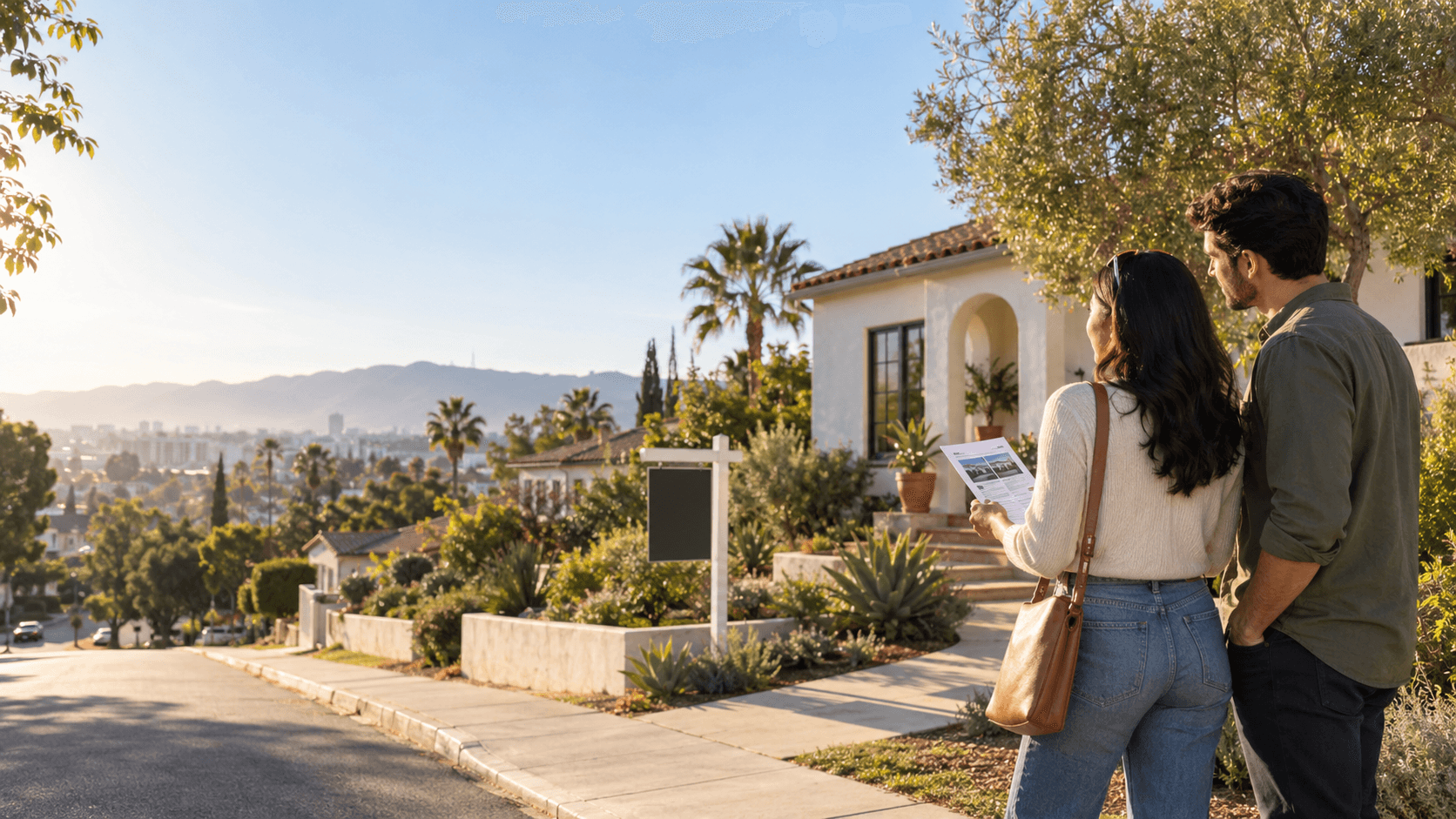
Orange County's median sale price sits around $1.2 million, but that number hides real variation. The more accessible cities cluster in the north and center of the county. Anaheim currently averages around $770,000, Buena Park and La Habra both run in the low $830,000s, Santa Ana sits near $845,000, Garden Grove around $867,000, and Westminster closer to $883,000. Those are still substantial prices, but they're a meaningful step down from the countywide median, and condos or townhomes bring the entry point down further in all of them.
South County doesn't offer the same relief. Even one of its more moderately priced cities, San Juan Capistrano, still averages close to $1.5 million, which is a useful reminder that "affordable" in Orange County is a relative term concentrated almost entirely in the north and central cities, not something available countywide.
It's also worth knowing that a lower price tag in a well-known city's less-marketed neighbor can sometimes close more of the gap than moving counties entirely. We've run the actual numbers on that strategy, comparing specific city pairs, in how to buy a house in Orange County when rates are back in the 7s.
What This Fall Looks Like
C.A.R.'s chief economist, Jordan Levine, has been fairly direct about the near-term outlook: pending sales have softened, homes are taking longer to sell, and if the Federal Reserve holds a more restrictive path for the rest of the year, rates could stay elevated or climb further, adding more pressure on affordability. For a patient, fully pre-approved buyer, that same slowdown tends to open up a little more room to negotiate on price, credits, or repairs than the market offered a year or two ago.
Weighing It Honestly
None of these five strategies make California cheap. They make it workable for a specific kind of buyer: one who's widened the map, done the paperwork on assistance programs early, chosen the right loan type for their situation, and run the actual monthly numbers before shopping instead of after. The buyers closing escrow this fall aren't the ones who found a secret. They're the ones who took the numbers seriously before they started looking, not after they'd already fallen for a house they couldn't quite afford.
Quick Check: How Californians Are Actually Buying Right Now
Q1. What was California's statewide median home price in August 2026?
(a) About $650,000
(b) About $901,420
(c) About $1.5 million
B
California's statewide median home price was $901,420 in August 2026, according to the California Association of Realtors.
Q2. (T/F) Down payment assistance programs like Dream For All also lower the monthly mortgage payment a buyer qualifies for.
F — Down payment assistance addresses the upfront cash needed to buy, not the ongoing monthly payment a buyer's income has to support under standard debt-to-income limits.
Q3. Roughly what percentage of California homeowners currently hold a mortgage rate below 5 percent?
(a) About 25 percent
(b) About 50 percent
(c) About 77 percent
C
Roughly 77 percent of California homeowners hold a mortgage rate below 5 percent, a major reason so few homes are currently listed for sale.
Q4. What is a key limitation of California's Dream For All program?
(a) It's available first-come, first-served with no limits
(b) It only opens for a short annual registration window and awards are decided by random drawing
(c) It requires no repayment of any kind
B
Dream For All opens for a short annual registration window, and awards are selected by random drawing rather than first-come, first-served.
Q5. Which Orange County cities does the article identify as relatively more accessible entry points?
(a) Newport Beach and Laguna Beach
(b) Anaheim, Buena Park, La Habra, Santa Ana, Garden Grove, and Westminster
(c) San Juan Capistrano and Dana Point
B
Anaheim, Buena Park, La Habra, Santa Ana, Garden Grove, and Westminster currently offer relatively more accessible entry points within Orange County, mostly clustered in the north and central parts of the county.
Q6. What does a 1-0 temporary rate buydown actually change about a loan?
(a) It permanently lowers the note rate for all 30 years
(b) It only lowers the payment in the first year; the note rate itself doesn't change
(c) It eliminates the down payment requirement
B
A 1-0 buydown only lowers the payment for the first year of the loan; the loan's actual note rate is unchanged and the payment returns to the full rate starting in year two.
About the author: I'm a licensed real estate agent practicing in California. This article is part of NITU Path, Chapter 2, a series written to walk buyers through their entire homeownership journey.
This article is for general informational and educational purposes only and is not financial or lending advice. Prices, rates, and program terms change often. Confirm current numbers and eligibility with a licensed lender before making a purchase decision.
Sources:
Back to Magazine