Home Owner
The previous owner may or may not leave the washer and dryer behind. Here's how to find out for sure, and what to actually buy if the laundry closet is empty on moving day.
NITU Path, Chapter 5: Settling In.
In short: A washer and dryer are not automatically part of a home sale in California. Some sellers leave them, some take them, and the only way to know for sure is what's written in the contract, confirmed again at the final walk-through. If you end up buying new, the real decisions come down to four things: top-load versus front-load, gas versus electric, whether your laundry space can even fit a side-by-side setup, and whether a rebate is worth chasing before you check out.
Two buyers close on similar houses the same week. One opens the laundry closet on moving day and finds a working washer and dryer still humming along from the previous owner. The other opens an identical-looking closet and finds two empty hookups, a cold water line, a drain, and nothing else. Both outcomes are completely normal, and neither one is guaranteed by anything you saw during a showing.
Why You Can't Assume Either Way
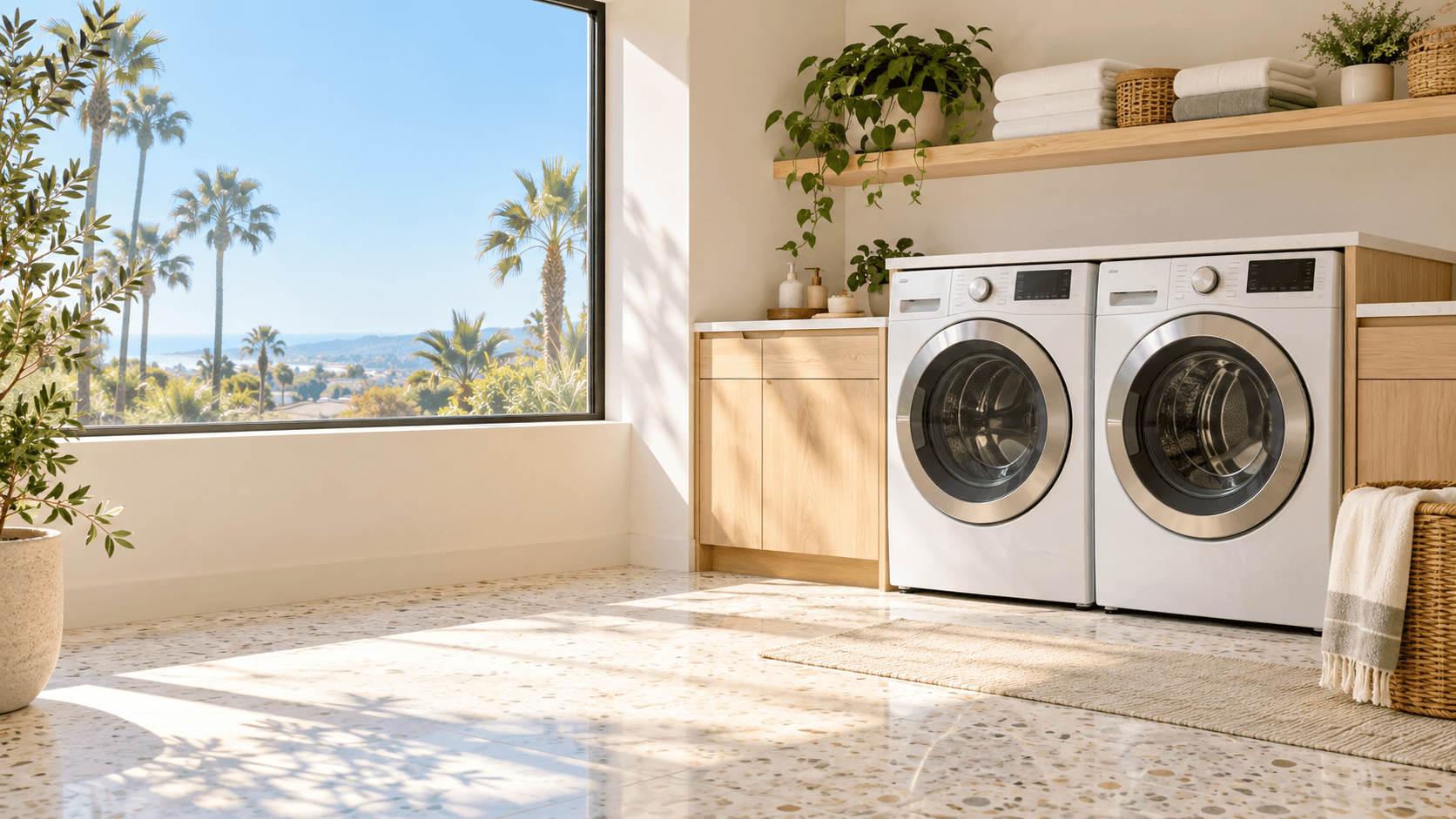
Under a standard California purchase contract, appliances aren't automatically included. A washer and dryer count as personal property, the same category as furniture, not a fixture that's permanently part of the house. The seller is legally free to take them unless the contract specifically says otherwise. The current C.A.R. purchase agreement includes a checkbox specifically for this, letting both sides state in writing whether stoves, refrigerators, washers, and dryers stay or go.
Whatever the listing photos showed doesn't legally guarantee anything. A washer and dryer sitting in the laundry room during your showing creates an expectation, not a contractual right. If you want them included, that needs to be written into the offer, not assumed from what you saw walking through.
Confirm it twice: once in the contract, once at the final walk-through. The purchase agreement is where the agreement actually gets made, but the walk-through right before closing is your last chance to verify it happened the way it was supposed to. We covered exactly this kind of last-minute discovery, including what one buyer found missing right before keys changed hands, in what a buyer found at the final walk-through.
If You're Starting From Scratch: Top-Load or Front-Load
Front-load washers use dramatically less water. A front-load cycle typically runs 10 to 14 gallons, compared to 30 to 40 gallons for a standard top-load. Higher spin speeds also pull more water out before the dryer even starts, which shortens dry time and lowers the energy bill on that end too. Combined, that efficiency gap can add up to $100 to $200 a year in utility savings for an average household, which matters more in California than in most states given local utility rates.
Top-loaders are cheaper upfront and lower maintenance. A traditional top-load runs roughly $499 to $599, compared to around $699 and up for a basic front-load. Top-loaders also don't develop the musty rubber-gasket odor that front-loaders are prone to if the door isn't left open to air out between loads. If that maintenance habit isn't realistic for your household, it's worth weighing against the water savings.
Lifespan and reliability are close enough not to be the deciding factor. Both styles typically last 8 to 10 years, and recent service-rate data shows only a marginal difference between the two, nothing worth basing the decision on by itself.
Gas or Electric Dryer Isn't Really Your Choice, Your Hookup Already Decided
Check what's actually behind the wall before shopping for a dryer. A gas dryer needs a gas line with a shutoff valve, plus a standard 120-volt outlet and proper venting. An electric dryer needs a dedicated 240-volt outlet. Whichever one your laundry space is already wired and piped for is the one that costs nothing extra to install. Choosing the other option means paying an electrician or plumber to add new infrastructure, on top of the appliance itself.
If neither hookup exists, or you're in a unit with no exterior venting, a ventless electric model is worth a look. Standard dryers need somewhere for hot, damp air to go. Some electric models are fully ventless, running on a standard configuration without needing an exterior vent at all, which matters in a condo or an older unit where running new ductwork to the outside isn't realistic.
Rebates Worth Checking Before You Buy, Not After
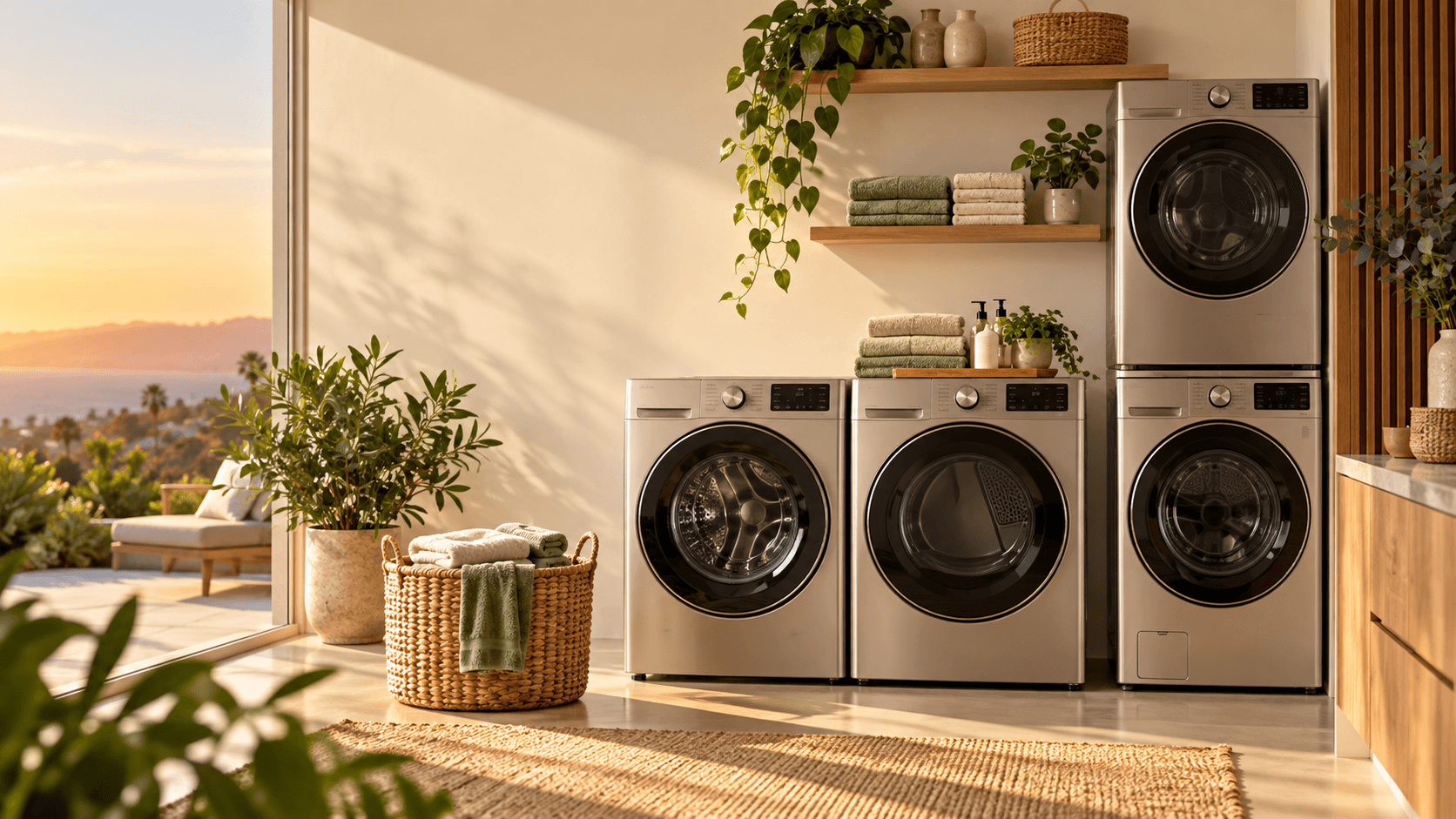
Depending on your water provider, a high-efficiency clothes washer that meets the CEE Tier 1 standard can qualify for a rebate starting around $85 through programs like SoCal Water$mart, with the exact amount varying by local water agency and funding availability at the time. It's a modest amount, but it's easy money to leave on the table if you buy first and check after. Look up your specific water district's current rebate list before finalizing a model, since not every washer on the shelf qualifies.
Stackable or Side-by-Side Comes Down to the Closet, Not Preference
A lot of California laundry closets, especially in condos and older homes, simply don't have the footprint for a full side-by-side set. Measure the actual space, width, depth, and door clearance, before falling in love with a specific model. Stackable units solve the space problem but typically come with somewhat smaller individual capacities than a comparable side-by-side pair, worth knowing if you're regularly washing bulky loads like comforters.
Weighing It Honestly
Whether you inherit a working set or start from zero, the appliance itself is rarely the expensive surprise. The expensive surprise is assuming either outcome without confirming it in writing, or buying a dryer that needs a hookup your laundry room doesn't have. If you haven't worked through the broader post-closing purchase list yet, laundry included, that's covered in 25 things to buy after closing on your first home, and the fuller first-month priority list is in new homeowner checklist: what to do after closing.
About the author: I'm a licensed real estate agent practicing in California. This article is part of NITU Path, Chapter 5, a series written to walk buyers through their entire homeownership journey.
This article is for general informational and educational purposes only and is not legal or contracting advice. Contract terms, rebate amounts, and appliance pricing change and vary by transaction, water agency, and retailer. Confirm specific inclusions with your agent and current rebate details with your local water provider before making decisions.
Sources:
Back to Magazine